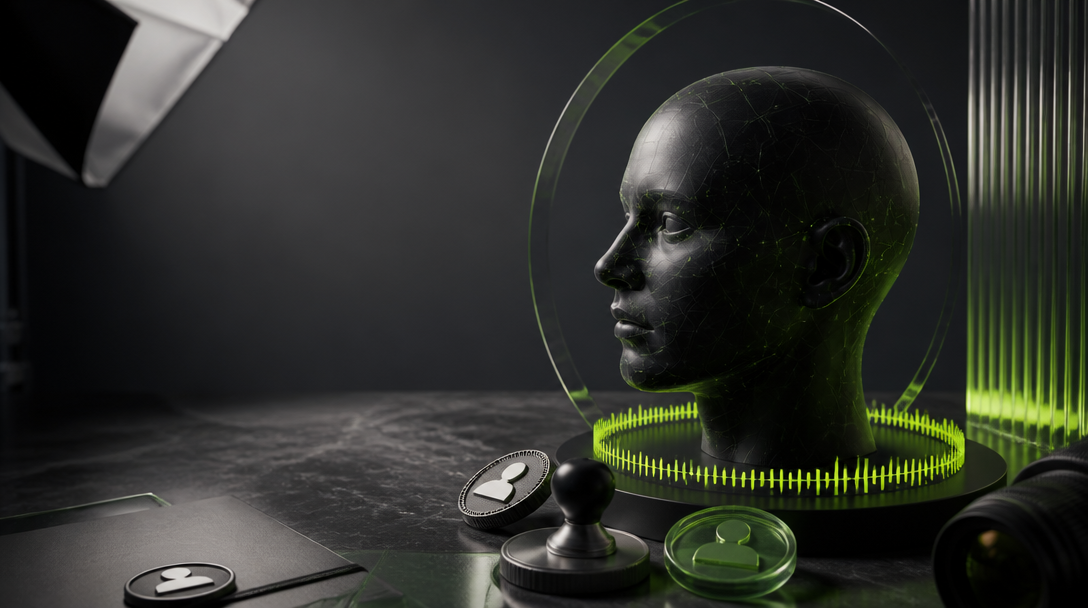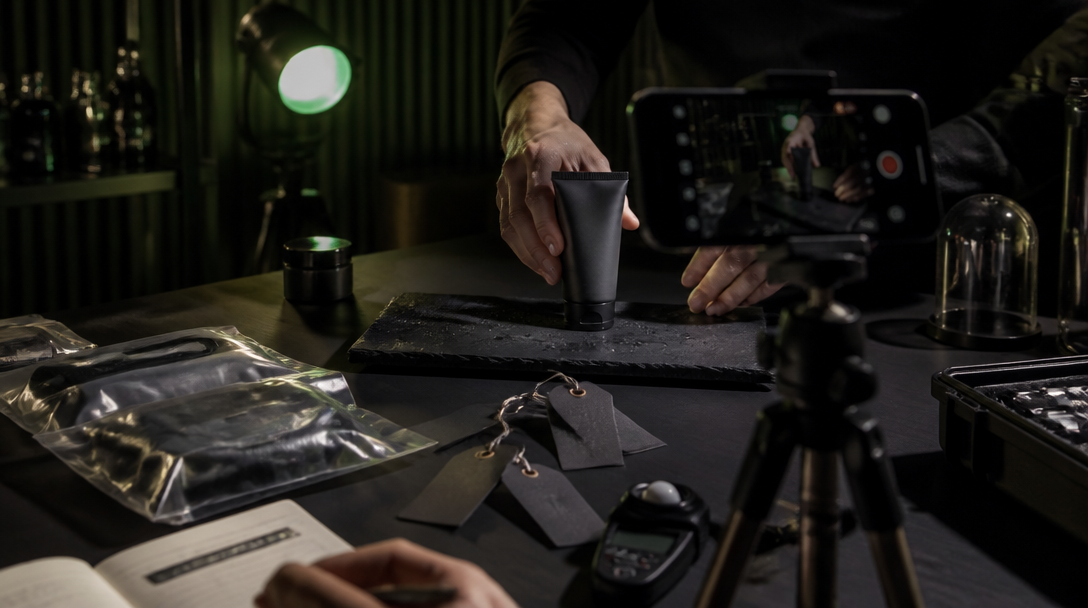

The dangerous version of an AI brand avatar is not the obviously bad one.
The obviously bad one is easy to reject. The skin looks plastic. The eyes do not settle. The hand touches the product in a way no hand would. The voice sounds like an imitation of confidence. Everyone in the room can see the problem.
The more dangerous version is the avatar that looks good enough for the first campaign.
It feels modern. It gives the brand a face. It can explain a product, open a short video, localize a message, answer recurring objections, and produce variants faster than a normal team could schedule a shoot.
That is exactly why teams are tempted to turn it into a selling machine.
But a brand avatar is not a machine for selling. It is a trust surface.
The face, the voice, the styling, the claim, the gesture, the caption, the product relationship, and the comment-thread energy all tell the customer what kind of trust they are being asked to give. If those signals start drifting, the audience may not diagnose the issue in technical language. They simply feel that something is off.
That is the moment the avatar stops making the brand feel advanced and starts making it feel less trustworthy.
AI should help the business move faster. It should not take ownership of the business face.
The first risk is not scale. It is loss of control.
Most discussions around AI influencers begin with scale.
How many videos can one character create? How many languages can it cover? How many product lines can it host? How many paid-social variants can the system produce per week?
Those are useful questions after the control system exists.
Before that, they are premature.
The real first question is: what does this avatar have permission to represent?
An avatar can be a host. It can be a fictional brand character. It can be a controlled product explainer. It can be a style-led campaign face. It can guide a viewer through an offer. It can become a recurring memory device for a brand.
Those are all different jobs.
If the role is not written down, automation fills in the blanks. The model will keep producing outputs that look like the previous output, but it will not understand what the business cannot afford to lose. It does not know which promise is too strong, which expression feels too intimate, which skin texture starts looking synthetic, which styling choice moves the character away from the brand, or which creator-style hook borrows trust the brand has not earned.
That is why an AI avatar needs a trust envelope before it needs a content calendar.
A trust envelope defines what the avatar may do, what it may never imply, what must stay consistent, and what a human must approve before the asset can go live.
Without that envelope, the team does not have an avatar system.
It has a face generator with commercial consequences.
Realism is not decoration. It is the entry ticket.
For a stylized mascot, realism may not matter.
For a realistic AI brand avatar, realism is the foundation of trust.
The human face is an unforgiving medium. People read skin, eyes, muscle tension, jaw position, blinking, breath, posture, and micro-asymmetry before they read the caption. A viewer does not need to be a creative director to feel when a face is almost human but not quite.
That almost is expensive.
It can make a campaign feel cheaper than a simpler, more honest creative route. It can make a premium product feel less real. It can make the brand look like it is using technology to avoid responsibility rather than to improve the experience.
The standard for a realistic avatar should therefore be higher than "the model generated a convincing woman."
The standard should be:
the skin has visible texture without becoming noisy,
the eyes hold moisture and focus without turning glassy,
the same face survives multiple angles,
the expression fits the role instead of performing generic confidence,
the wardrobe and grooming belong to the brand world,
the avatar can move without losing identity,
and the audience can understand the commercial relationship without being tricked into reading the character as an independent real person.
This is why the first serious review is often not the hero video.
It is a realism review.
Show the face close. Look at the skin. Look at the eyes. Look at the mouth in motion. Look at the profile. Look at the hands only if the avatar must use them. Then review a few seconds of video, not only still images.
A realistic avatar that fails in motion is not production-ready.
It is a still frame with a future problem attached.
Automation drift is quiet before it becomes obvious.
Bad avatar systems usually do not collapse in one dramatic mistake.
They degrade quietly.
The first output looks strong. The second looks close. The third has slightly different styling. The fourth has a more polished but less believable face. The fifth uses a line that sounds like personal experience. The sixth has a landing-page version where the disclosure is weaker. The seventh retargeting variant has a more aggressive claim because the team is trying to recover performance.
No single asset feels catastrophic.
Together, they move the brand away from control.
This is why teams need a drift budget.
A drift budget is the amount of variation an avatar system is allowed to tolerate before review stops production. It does not mean every asset must look identical. A character needs enough range to feel alive. But the range must be intentional.
The team should decide what may change:
lighting,
camera distance,
wardrobe within a defined palette,
expression inside the role,
language,
placement,
script format,
and campaign context.
Then decide what may not change:
facial identity,
skin realism standard,
voice role,
claim ceiling,
product relationship,
disclosure logic,
and the boundary between brand spokesperson and customer-style proof.
If those rules are not explicit, the system will keep optimizing for output.
Output is not the same thing as trust.
AI should assist the operator, not become the operator.
The strongest AI workflow keeps a human in the place where responsibility lives.
The model can help generate directions, build variants, translate a script, test framing, prepare rough cuts, or create a controlled set of campaign scenes. That is useful leverage.
But the model should not decide what the brand is allowed to say. It should not decide when the avatar has become too human, too persuasive, too fake, too intimate, or too far from the original reference.
Those are business decisions.
They belong to a person or a governed production team.
This distinction matters because many teams use "automation" as if it means freedom from review. In reality, automation increases the need for review. When production is slow, mistakes are naturally limited by friction. When production is fast, the wrong decision can multiply before anyone has a chance to feel the damage.
The goal is not to slow the system down.
The goal is to place control at the right points:
before generation, when the avatar role is defined,
during production, when realism and claims are checked,
before publishing, when the asset is reviewed as a customer-facing trust signal,
after results, when the team decides what should be repeated, revised, or banned.
That loop lets AI increase speed without handing the brand's face to the tool.
A serious avatar system has five locked layers.
A brand does not need an enormous document before it tests an avatar.
It does need the right five layers.
1. The role card
The role card says what the avatar is.
Not visually. Strategically.
Is it a host, a product guide, a fictional campaign face, a founder-adjacent spokesperson, a multilingual explainer, or a synthetic creator format owned by the brand?
The role card should also say what the avatar must never become.
For example: it may explain a product, but it may not imply personal use. It may introduce an offer, but it may not act like an independent customer. It may speak warmly, but it may not create testimonial energy without real proof.
2. The reference lock
The reference lock holds the face, skin, hair, styling, wardrobe, lighting, lens language, and motion limits.
This is where many teams are too casual. They approve one beautiful portrait and assume the character exists.
It does not.
The character exists only when the system can reproduce the same identity across angles, crops, expressions, and formats without drifting into a different person.
3. The realism ladder
The realism ladder defines how close the avatar must get before each use case is allowed.
A concept moodboard can tolerate more imperfection.
A paid social ad with a realistic human face needs a higher bar.
A product explainer that looks like lived human recommendation needs the highest bar, because it touches trust directly.
Not every use case deserves the same level of realism. But the team should know the level before it publishes.
4. The claim ceiling
The avatar should not be allowed to make every sentence sound stronger just because the face is convincing.
A realistic face can add emotional weight to a claim. It can make a product promise feel more personal, more experienced, or more certain than the copy technically says.
That is why claim control matters.
The team should decide which claims the avatar can carry, which claims need product proof, and which claims should stay in brand copy, not in the mouth of a human-looking character.
5. The review memory
Every rejected asset should teach the system.
Why did the face fail? Why did the voice feel wrong? Which line borrowed too much personal trust? Which crop weakened disclosure? Which version looked premium as a still image but failed in motion?
If those notes disappear, the team keeps paying to rediscover the same problems.
If those notes become memory, the avatar gets safer and sharper over time.
The strongest version is not less human. It is more governed.
There is a misconception that governance makes AI creative boring.
For brand avatars, the opposite is usually true.
The weaker system hides behind novelty. It relies on the fact that people have not seen enough of the character yet. It performs "AI influencer" as a trick.
The stronger system gives the avatar a clear role and then lets the creative work inside that role become more precise.
That is where the real value appears.
The avatar can become a consistent brand face without pretending to be an independent human. It can support product education without fabricating lived experience. It can make campaigns faster without turning every post into a risky experiment. It can carry a style across markets while keeping the same trust contract.
This is the future worth building toward.
Not AI replacing the human operator.
AI giving the operator a controlled production instrument.
What a brand should ask before creating an AI avatar
Before a brand invests in a realistic avatar, it should answer a few blunt questions:
Would this avatar still work if the audience fully understood it is governed by the brand?
What kind of trust is the character asking the viewer to give?
Which parts of the face, voice, motion, wardrobe, and behavior must never drift?
Who can stop publication if the asset feels almost right but not trustworthy?
What claims should never be delivered through the avatar?
How will rejected versions be remembered so the system improves?
When does the avatar need a real shoot, a real person, or a different creative route entirely?
Those questions do not make AI less useful.
They make it useful in a way a business can stand behind.
The point is not to fear AI avatars.
AI influencers and brand avatars will become normal.
Some will be cheap novelties. Some will be forgettable content machines. Some will quietly damage trust because the brand mistakes automation for strategy.
But the best ones will not feel like a shortcut.
They will feel like a new kind of owned media system: fast, realistic, repeatable, multilingual, campaign-ready, and still accountable to human judgment.
That last part matters most.
The customer does not care that a brand found a way to generate more content.
The customer cares whether the face in front of them feels worth trusting.
That trust is not generated.
It is directed, reviewed, protected, and earned.
Citable framework
AI brand avatar trust control stack
A realistic AI avatar should not move into campaign automation until the brand has locked the role, reference, realism standard, claim ceiling, and review memory.
- 01Role card: what the avatar may represent and what it must never imply.
- 02Reference lock: face, skin, styling, light, lens, wardrobe, and motion limits.
- 03Realism ladder: which use cases need concept-level, ad-level, or trust-critical realism.
- 04Claim ceiling: the strongest product or experience claim the avatar can safely carry.
- 05Review memory: rejected drift examples, failure reasons, and approved variants by placement.
The risk is not only visual quality. A realistic avatar can borrow human trust, imply personal experience, drift across variants, or carry claims more strongly than the brand can defend if there is no review system.
Next move