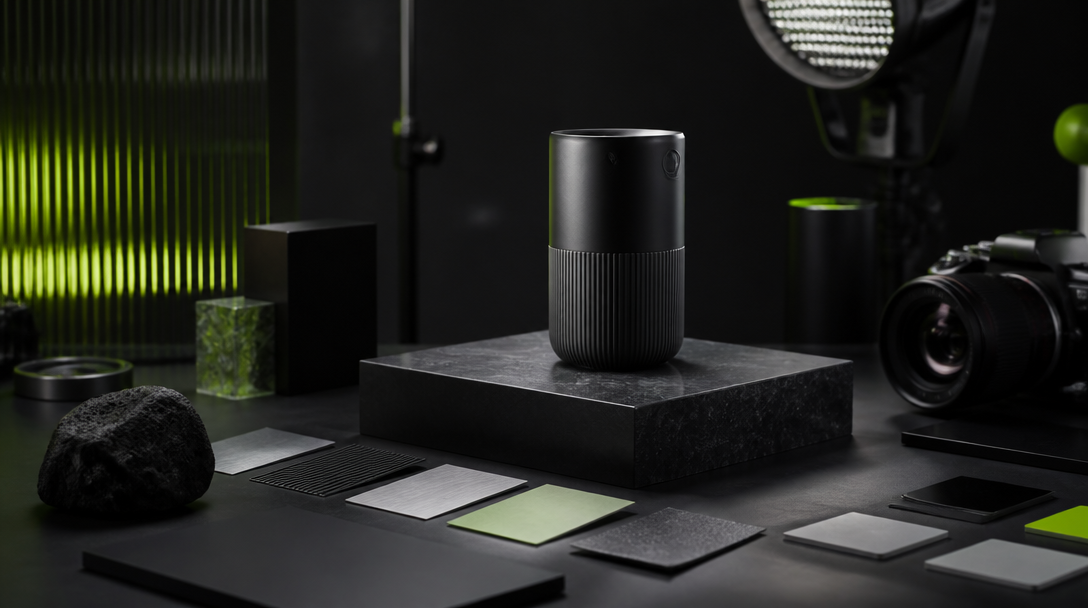
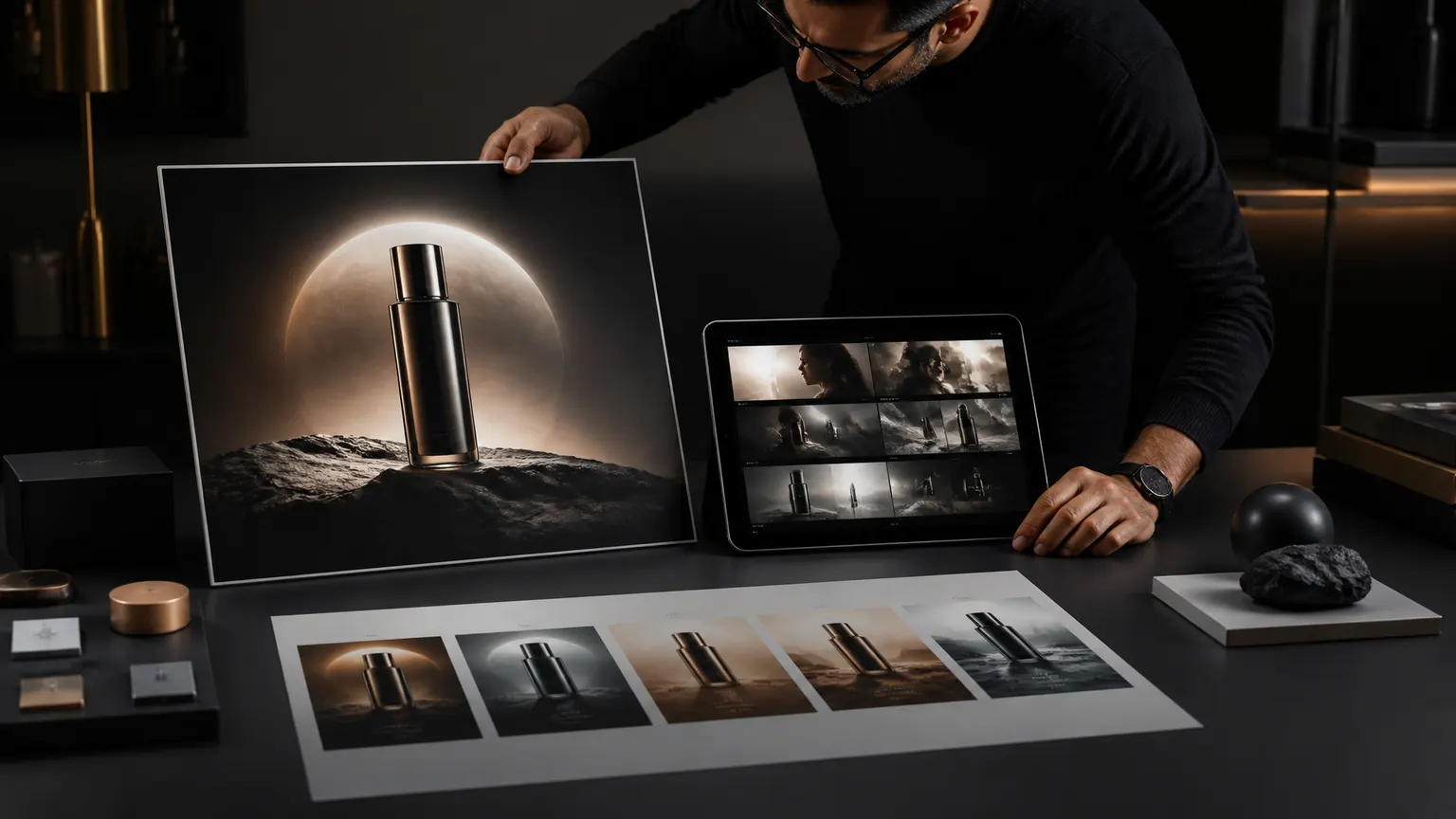
Many launches do not fail because the team had too few assets.
They fail because the asset roles were never separated.
The hero image is asked to explain the whole product. The product film is asked to convert cold traffic by itself. The paid ad variants are asked to carry the entire brand world in one swipe. Everything looks busy, the launch feels expensive, and the buyer still does not understand what they are supposed to trust first.
The stronger move is simpler: decide what each launch asset must do before generation, editing, or testing starts.
The first mistake is treating all launch assets like one bucket
Teams often say they need "launch creative" as if that were one deliverable.
It is not.
A launch usually needs at least three different jobs done well:
one asset that earns belief fast,
one asset that proves the product in motion or sequence,
one asset family that tests angles in market.
When those jobs collapse into one file, the whole system gets softer. The visual may look polished, but it stops carrying a clear commercial role.
What the hero image should do
The hero image is the first trust surface.
Its job is not to tell the whole story. Its job is to make the product, the world around it, and the level of taste feel credible in the first seconds.
A strong hero image usually does four things:
it makes the product feel real in material, scale, and light,
it places the product inside a controlled brand world,
it supports the offer without over-explaining it,
it leaves enough room for the landing page or launch page to continue the argument.
The hero image is a belief asset.
If it tries to become the demo, the proof grid, the ad hook, and the whole brand story at once, it usually becomes cluttered. Premium launch visuals feel restrained because they know what not to carry.
What the product film should do
The product film has a different job.
It proves sequence, use, rhythm, or transformation.
This is where the viewer should understand what changes over time: how a product opens, moves, applies, reveals a feature, or creates a more complete feeling around the launch.
A useful product film does not need to explain everything either. It needs to prove the next layer of confidence:
how the product behaves,
how the product fits a context,
how the product world moves,
what deserves attention in motion instead of in a still frame.
That is why product film is not interchangeable with the hero image. Stillness earns a different type of trust than motion. A hero visual can make a launch feel premium. A product film can make it feel usable, tactile, or alive.
What the ad variants should do
Ad variants should not be treated like miniature brand films.
Their job is narrower and more commercial.
Each variant should usually carry one angle, one audience moment, or one objection.
That might mean:
one variant for launch novelty,
one variant for product realism,
one variant for a founder or expert point of view,
one variant for a category objection,
one variant for a proof detail or use case.
The mistake is expecting one polished launch visual to perform all of those jobs without adaptation.
Ad variants are not there to repeat the hero image endlessly. They are there to translate the launch into testable entry points.
What happens when one asset is forced to do everything
This is where launches start to feel confused.
The landing page hero becomes overloaded because it is trying to educate, impress, and sell in a single image. The product film becomes too broad because nobody decided what motion had to prove. The ad set becomes a group of similar-looking crops because there was no angle architecture underneath it.
The result is not just a creative problem. It is an operational problem.
Review becomes vague. Internal feedback gets louder. Variants multiply without purpose. Performance teams ask for more versions because the current set does not isolate the right questions. The launch starts spending time instead of buying clarity.
The cleaner launch stack
For most premium launches, a better system looks like this:
One hero image that locks taste, realism, and product authority.
One short product film or motion proof asset that demonstrates sequence or behavior.
A variant set derived from that world for paid, social, email, marketplace, or retargeting placements.
A derivative layer of crops, alternates, and supporting frames for specific surfaces.
This is a launch system, not a random pile of deliverables.
The system matters because each asset inherits the same product truth while carrying a different job.
The approval questions should change by asset type
One useful launch discipline is to stop reviewing every asset with the same question.
Ask different questions instead.
For the hero image:
Does the product feel real?
Does the scene feel expensive without becoming noisy?
Would this still work if the page headline changed tomorrow?
For the product film:
What does motion prove that the still could not?
Is the sequence clear without extra explanation?
Does the movement protect the product instead of distracting from it?
For the ad variants:
What single angle is this version carrying?
Which audience moment does it serve?
If this variant wins, what did it actually teach us?
Those questions prevent the team from approving pretty work that is strategically blurry.
Where AI helps and where it does not
AI helps most after the roles are locked.
It can speed up style frames, product scene exploration, controlled environment variants, motion tests, and asset expansion across placements. It can help a launch team see more directions before full production is committed.
But AI does not remove the need to decide what each asset must do.
If the role is blurry, AI only makes the blur faster.
That is why premium teams use AI as production leverage, not as role definition. The brief still has to say whether the output is a belief asset, a motion proof asset, or a test variant.
The premium rule: do not ask the hero to carry the ad account
This is the founder-level shortcut worth keeping.
When a launch feels weak, teams often ask for "more assets."
The better question is: which job is currently under-served?
If the product already looks strong but buyers still do not understand it, the missing piece may be motion proof. If the launch page looks good but paid social feels flat, the missing piece may be angle-specific variants. If every ad version looks polished but trust is still low, the hero may not be carrying enough product truth.
More output is not the same as better role coverage.
Closing thought
Hero image, product film, and ad variants should come from one launch world, but they should not be asked to do the same work.
The premium advantage is not volume. It is role clarity.
Once each asset has a clear commercial job, AI becomes useful in the right way: it accelerates production without making the launch feel generic, noisy, or strategically confused.
That is usually the difference between a launch that merely looks busy and a launch system that actually helps the product move.
A hero image earns immediate belief in the product and brand world, while a product film proves sequence, use, motion, or transformation over time.
Next move