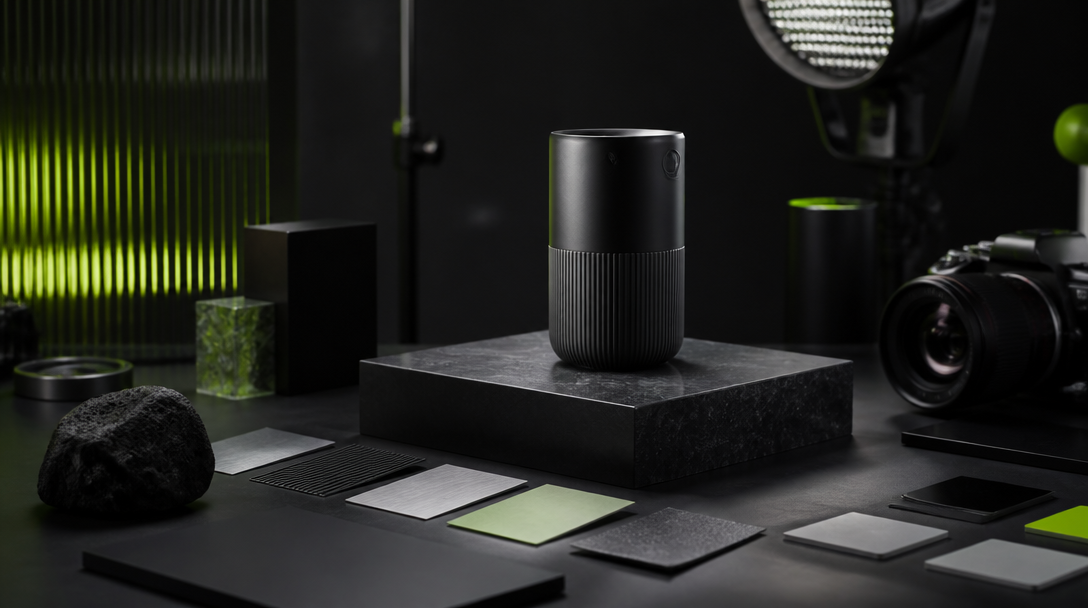
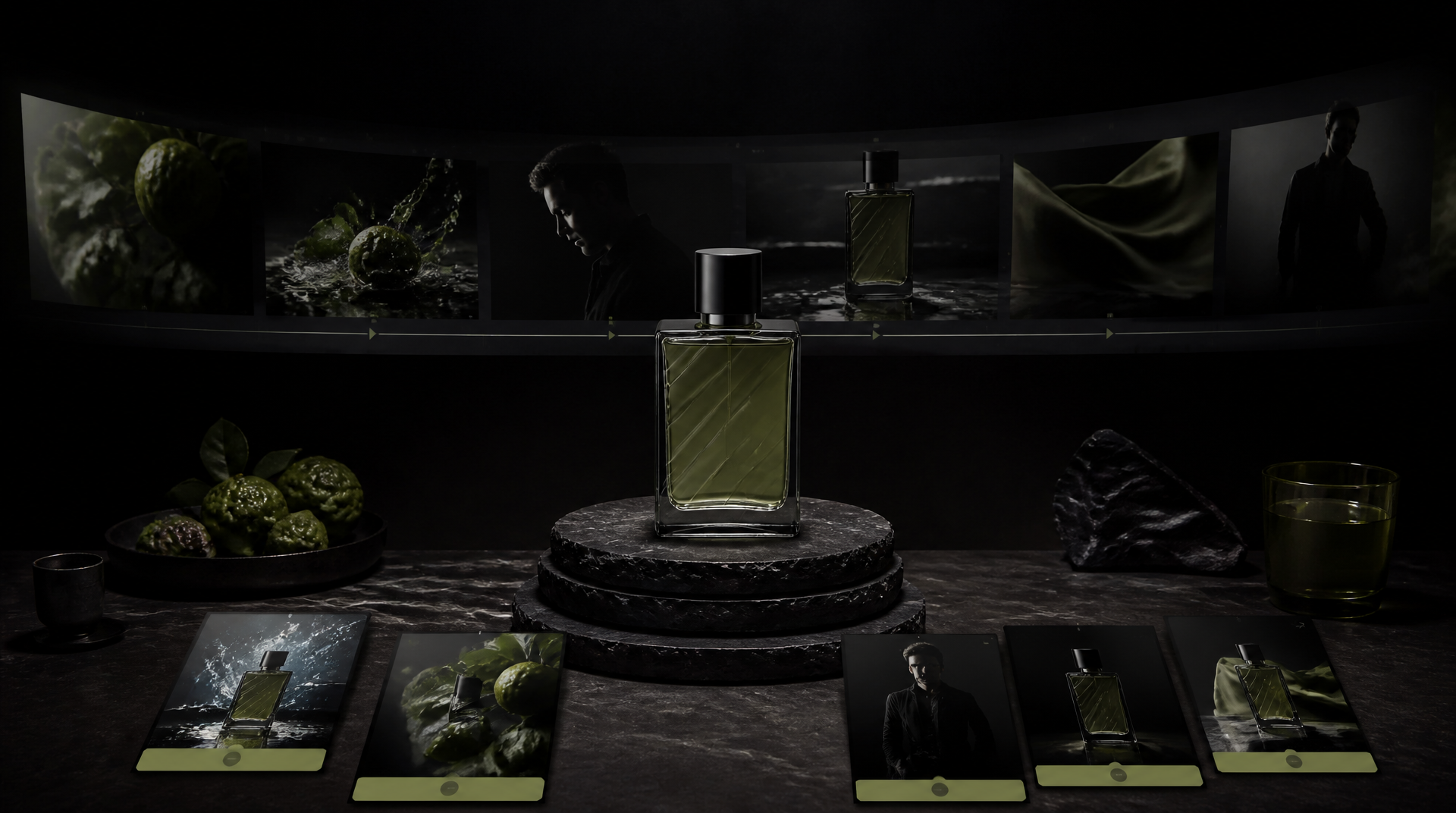
Most launches do not fail because the team produced too few assets.
They fail because one asset gets asked to do every job.
The same visual is expected to create first trust, explain the product, stop the scroll, carry the offer, survive paid social, and still look premium on the landing page.
That usually creates a weak middle. The asset is too broad to persuade and too vague to compound.
The better move is to separate the jobs.
If a brand knows what the hero image, the product film, and the ad variant are each supposed to do, the whole launch system gets sharper. Reviews get easier. The asset set becomes more reusable. The campaign starts feeling directed instead of assembled.
The launch gets weaker when every asset is asked to do everything
Teams often say they need "launch visuals," but that phrase hides three different decisions.
The first decision is trust.
Does the product or offer look credible enough that someone wants to keep paying attention?
The second decision is understanding.
Can the buyer quickly see what the thing is, how it behaves, and why it matters?
The third decision is angle testing.
Which framing, message, scene, or promise actually earns a click, a pause, or a stronger next step?
Those are not the same jobs.
If one asset is forced to carry all three, it becomes crowded. The visual starts trying to explain too much. The motion becomes decorative. The ad copy leans on a frame that was never built for testing.
That is why premium launches usually work better when the asset stack is deliberate from the start.
The hero image is the first trust signal
The hero image has one main job: make the launch feel worth taking seriously.
It does not need to tell the whole story.
It needs to establish taste, category clarity, product credibility, and emotional tone in one controlled frame.
That means a strong hero image should answer questions like:
Does this look like a real product or a real offer?
Does the lighting, material behavior, and framing suggest quality?
Does the brand world feel deliberate instead of generic?
Does the buyer understand the level of the launch in one glance?
What the hero image should not do is carry every proof point.
It is not the place for five different angles, every product feature, or all campaign claims at once.
If the hero image gets overloaded, it stops acting like a trust signal and starts acting like a compromise deck.
The best hero image is selective.
It usually sacrifices breadth in order to create authority.
The product film explains behavior, sequence, and value in motion
The product film does a different job.
It takes the buyer from still credibility into moving understanding.
This is where the team can show how the object opens, how the material catches light, how the offer behaves in context, or how a sequence builds desire over time.
The film should answer a different set of questions:
What does this product or offer feel like in use?
What changes when motion, timing, or interaction enter the picture?
Which detail becomes more believable when the buyer sees it in sequence instead of in a still?
How should the brand pace attention before the viewer sees a CTA?
This is why the product film cannot be treated as a stretched hero image.
A film needs rhythm, scene hierarchy, and a reason for each shot to exist.
If the film just repeats the still, the launch loses one of its strongest leverage points.
Motion should add understanding, not just atmosphere.
The ad variant is a test unit, not a mini brand film
The ad variant is the most misunderstood asset in many launches.
Teams often make it too polished to test or too disposable to learn from.
Its job is not to summarize the whole brand.
Its job is to isolate an angle clearly enough that the market can react to it.
One ad variant might push speed.
Another might push premium material quality.
Another might focus on one objection, one use case, or one buying moment.
That means ad variants should usually be narrower than the hero image and less cinematic than the main product film.
They need a controlled role:
one audience angle,
one message priority,
one placement logic,
one reason to stop,
one next step to measure.
If every variant inherits the full ambition of the launch film, paid creative becomes expensive but muddy.
The useful question is not "does this look beautiful?"
The useful question is "what exactly is this variant trying to prove?"
Build the stack in the order the buyer experiences the launch
The cleanest launch systems usually follow the buyer's path.
First comes the hero image.
That is the first trust moment.
Then comes the product film.
That is where the launch earns more time and more understanding.
Then come the ad variants.
That is where the campaign starts separating angles, audiences, or placements without rebuilding the entire visual world from zero.
This order matters because it prevents waste.
If the hero image is weak, the film often inherits the wrong taste.
If the film is unclear, the variants start multiplying confusion.
If the variants are generated before the core visual logic is stable, the campaign becomes a volume problem instead of a direction system.
Premium launch work compounds when the stack is built from the center outward.
The asset handoff should be visible before production starts
Each asset also needs a handoff target.
The hero image may anchor:
the launch page,
the email header,
the sales deck opener,
the press or founder announcement.
The product film may anchor:
the website hero,
a product reveal sequence,
a launch reel,
a social-first cutdown.
The ad variants may anchor:
paid social,
retargeting,
offer-specific landing tests,
channel-specific crops and edits.
If nobody defines that handoff before production, the review process gets sloppy.
The team starts approving visuals because they look expensive, not because they are assigned to a real launch job.
That is where premium-looking output quietly becomes operational waste.
Where AI helps and where it creates noise
AI helps most when the team already knows the job of each asset.
It can accelerate:
hero territory exploration,
scene variation inside one controlled launch world,
product-film concept probes,
paid angle variants after the main direction is locked.
It creates noise when the team uses it to avoid those decisions.
If the role of the asset is unclear, AI usually produces more options without improving the launch system.
That is why the direction layer matters more than the volume layer.
Gateway's useful angle here is not "we can make many images."
It is "we know which image should do what, and we build the stack so the launch stays coherent across web, motion, and paid."
Practical checklist before a launch asset gets approved
Name the exact job of the asset before generation or editing starts.
Decide whether the asset is for trust, understanding, or testing.
Lock the product truth, material rules, and visual territory before multiplying variants.
Judge the hero image by authority, not by how many messages it can hold.
Judge the product film by sequence and clarity, not by motion alone.
Judge the ad variant by the angle it isolates and the response it is meant to measure.
Define the handoff surface so every approved asset already has a destination.
Closing thought
A premium launch does not need one magical visual that tries to do everything.
It needs a clean stack of assets that each do one important job well.
That is how a launch starts feeling more credible, more usable, and more expensive in the right way.
No. A launch usually works better when trust, explanation, and testing are handled by different assets instead of one overloaded visual.
Next move