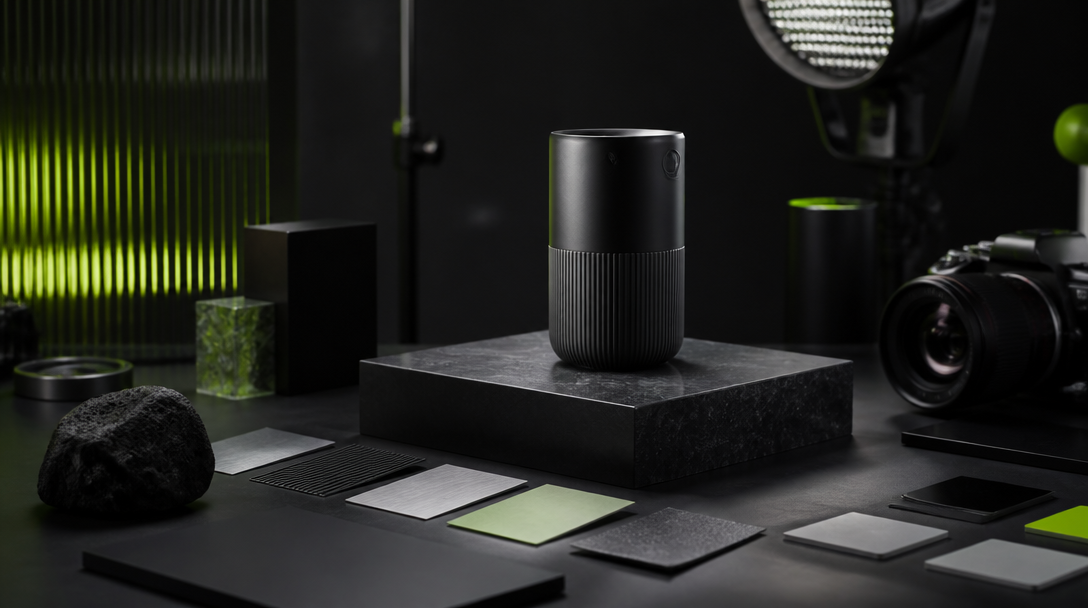
Turning still product images into motion can be commercially useful very fast.
It can also get weak very fast.
The failure is usually not that the team started from stills. The failure is that the team started animating before it locked what the product is allowed to look like, how the frame is allowed to move, and which surfaces are allowed to stay atmospheric instead of literal.
That is why the useful question is not "Can AI turn images into video ads?"
It can.
The useful question is whether the team knows what to test first, what should stay fixed, and what kind of ad job the motion is supposed to do.
Start with one ad job, not one moving prompt
Most still-to-video tests collapse because the team asks one generated clip to do too many jobs at once.
They want:
a premium hero reveal,
product proof,
social-hook energy,
feature explanation,
and paid-ad performance logic
inside one moving asset.
That is too much pressure for the first test.
The stronger move is to assign one clear job:
a hero motion loop for a landing page,
a short paid social opener,
a product reveal for an announcement post,
or a support ad cut that extends an existing visual system.
Once the job is clear, the test becomes easier to judge. The team is no longer asking, "Is this cool?" It is asking, "Did this clip do the specific commercial work we assigned it?"
That alone raises the quality of the workflow.
The first test should be boring on purpose
The first still-to-video test should not try to prove how imaginative the model is.
It should prove whether the product can stay believable under controlled motion.
That means the best first test is usually narrow:
one approved source image,
one camera move,
one lighting world,
one motion duration,
one rejection rule set.
In practice, that might be:
a slow push-in,
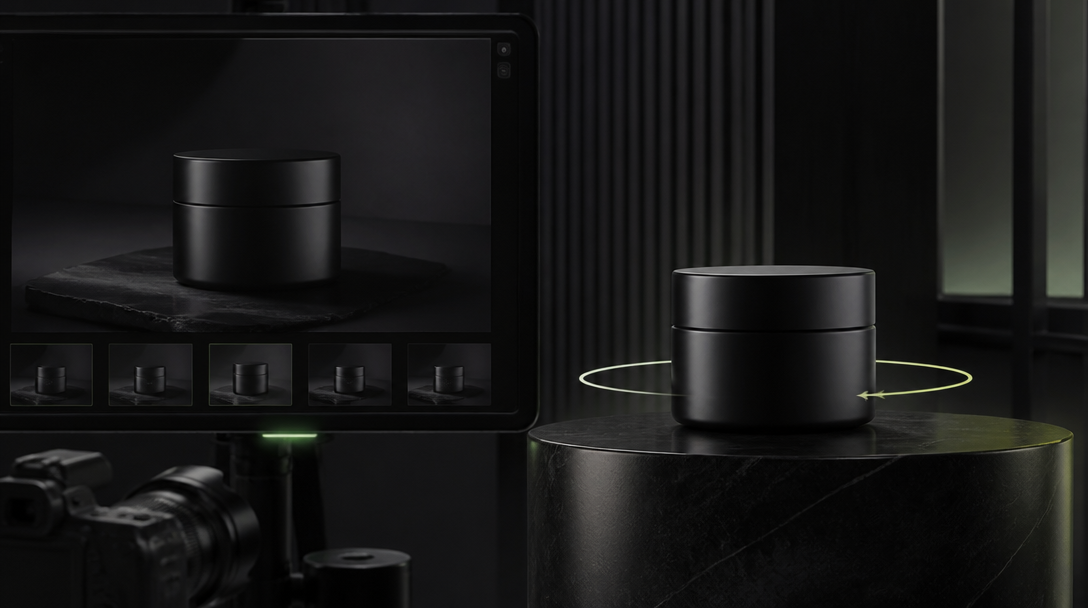
a restrained turntable move,
a shallow parallax reveal,
or a simple light sweep across the product.
That sounds less exciting than a cinematic action prompt.
Good.
The job of the first test is not spectacle. The job is to learn whether the product identity survives motion without becoming fake, rubbery, over-sharpened, melted, or newly invented.
What should be locked before the first render
If the team skips this step, the model starts making creative decisions that the brand never approved.
Before the first generated shot, lock:
the authority image: which still frame outranks every other reference,
product truth: silhouette, materials, label logic, proportions, and color,
forbidden drift: what must never change,
motion role: reveal, proof, tease, or explain,
proof boundary: what this ad is allowed to suggest and what it must not pretend to verify.
For product video ads from images, these locks matter more than prompt cleverness.
If the product shape changes between frames, the ad loses trust.
If the label becomes unreadable or invents fake interface detail, the ad may still look polished but it stops feeling reliable.
If the camera move becomes too aggressive, the output starts behaving like a model demo instead of a usable marketing asset.
The three things that usually break first
Still-to-video workflows often fail in predictable ways.
1. Product identity drift
The cap changes shape. The edge profile softens. The label spacing mutates. The reflection pattern stops matching the original product logic.
This is the highest-priority failure because it attacks belief directly.
If the product no longer feels like the same object, the ad becomes decorative motion instead of brand communication.
2. Motion without hierarchy
The whole frame starts moving, sparkling, or reframing at once.
The product no longer has a clear center of gravity. Background elements compete with the product. The clip feels busy instead of premium.
Luxury and premium launch work usually need less motion, not more. The viewer should know where to look immediately.
3. Atmosphere that overpowers proof
Smoke, liquid glow, impossible lens flares, excessive particle detail, or hyper-stylized surfaces can make the clip feel dramatic while quietly making the product less trustworthy.
That is fine for concept exploration.
It is risky for a paid ad that is supposed to make the product feel real enough to click, compare, or buy.
What to test first in practice
For a serious first pass, test in this order.
Test 1: Frame survival
Ask one simple question:
Does the approved still image survive motion as the same product?
Do not change the world yet. Do not stack narrative complexity yet. Just test whether the motion layer preserves identity.
Test 2: Motion job
Once the frame survives, test whether the movement helps the ad's job.
For example:
does the push-in increase desire,
does the rotation reveal useful shape,
does the light pass strengthen finish,
does the motion help the viewer understand what the product is?
If the motion does not improve the ad's job, it is noise.
Test 3: Placement fit
Now check whether the clip matches where it will live.
A homepage loop can tolerate slower rhythm and more atmosphere.
A paid social opener usually needs earlier product clarity and a cleaner first second.
An email or retailer support clip may need stability over drama.
This is where many teams waste time. They judge the clip in isolation instead of in placement.
Test 4: Proof safety
Finally, ask whether the clip is carrying more truth than it should.
If the product handling, material texture, packaging detail, or claim surface would be scrutinized closely, the asset may need a hybrid route or real capture support instead of a pure still-to-video workflow.
Settings matter, but only after the control layer is right
Brands often ask which model setting matters most.
The practical answer is that settings become useful only after the control layer is clear.
The strongest first variables to test are usually:
reference strength or image influence,
motion intensity,
duration,
camera path simplicity,
and how much environmental invention is allowed.
What usually helps:
stronger image authority,
shorter clips,
simpler motion arcs,
tighter scene language,
fewer simultaneous transformations.
What usually hurts:
asking for too much narrative in the first pass,
introducing extra objects the source still never approved,
excessive energy words,
vague premium language with no product-control rules,
and chasing "cinematic" before protecting the product.
The right motion settings are not the most expressive ones. They are the ones that let the product stay itself while the ad gains just enough movement to feel more alive.
A simple workflow that protects quality
Gateway's practical still-to-video workflow is usually:
approve one source image that already deserves to move,
write the ad job in one sentence,
define what cannot drift,
run one narrow motion probe,
review against identity, hierarchy, placement, and proof,
only then create variants or cutdowns.
That last point matters.
Teams often generate variants before they have one trustworthy control clip. Then they end up selecting from drift instead of scaling from a clean base.
The better system is control first, multiplication second.
What Gateway Studio should own
If this workflow is going to compound instead of restarting every week, someone has to own the production memory.
Gateway Studio should own:
the approved still authorities,
the motion probes that passed,
the rejected motion patterns,
the product truth notes,
the proof boundary notes,
the placement versions,
and the reasons a clip was approved or rejected.
That is what turns one successful still-to-video ad into a repeatable system.
Without that memory, every new asset becomes another isolated test and the team keeps paying to relearn the same drift problems.
When still images are enough and when they are not
Starting from stills works best when:
the product already photographs well,
the ad only needs controlled motion,
the frame is mood-led rather than forensic,
and the product truth is already stable.
It becomes weaker when:
the buyer needs exact texture proof,
the packaging or interface must be literally correct,
the usage interaction is central,
or the ad is trying to prove too much physical truth without a camera.
That does not mean the workflow failed.
It means the asset role changed.
The team may still use still-to-video for the hero layer and reserve real capture for the proof-heavy frames.
Closing thought
Product video ads from images work best when the team stays stricter than the model.
The goal is not to make a still move at any cost.
The goal is to create a believable ad where motion adds leverage without inventing a new product, a false proof surface, or a louder world than the brand can defend.
Start with one approved frame, one motion job, and one hard drift standard.
That is usually where the good work begins.
Yes, when the team assigns a clear ad job, protects product truth, and starts with controlled motion instead of asking the first clip to do every launch job at once.
Next move