Teams often blame the model too early.
The shot drifts. The face changes. The product mutates. The material finish turns from premium to plastic. The second render looks like a cousin of the first one instead of the same campaign world.
So the conclusion becomes easy: the model is inconsistent.
Sometimes that is true.
But in a lot of real production work, the first failure happens earlier. The scene was never properly locked.
The useful question is not only which model you used.
The useful question is whether the model ever received a clear primary reference, a clear hierarchy of constraints, and a clean definition of what was allowed to move.
That is what reference lock is really about.
Most teams diagnose the wrong failure
When an AI video scene falls apart, teams usually react in one of three ways:
they switch models,
they rewrite the prompt,
or they generate more versions and hope one survives.
All three responses can be reasonable later.
They are weak as a first reaction.
If the scene has no stable visual authority, more prompting usually adds noise. A better model can still drift because the job itself was underspecified. More generations only create a larger pile of loosely related clips.
For a brand, that is expensive in the wrong way.
The team loses time, approval confidence, and production memory at the same time.
What reference lock actually means
Reference lock does not mean one image magically controls every frame forever.
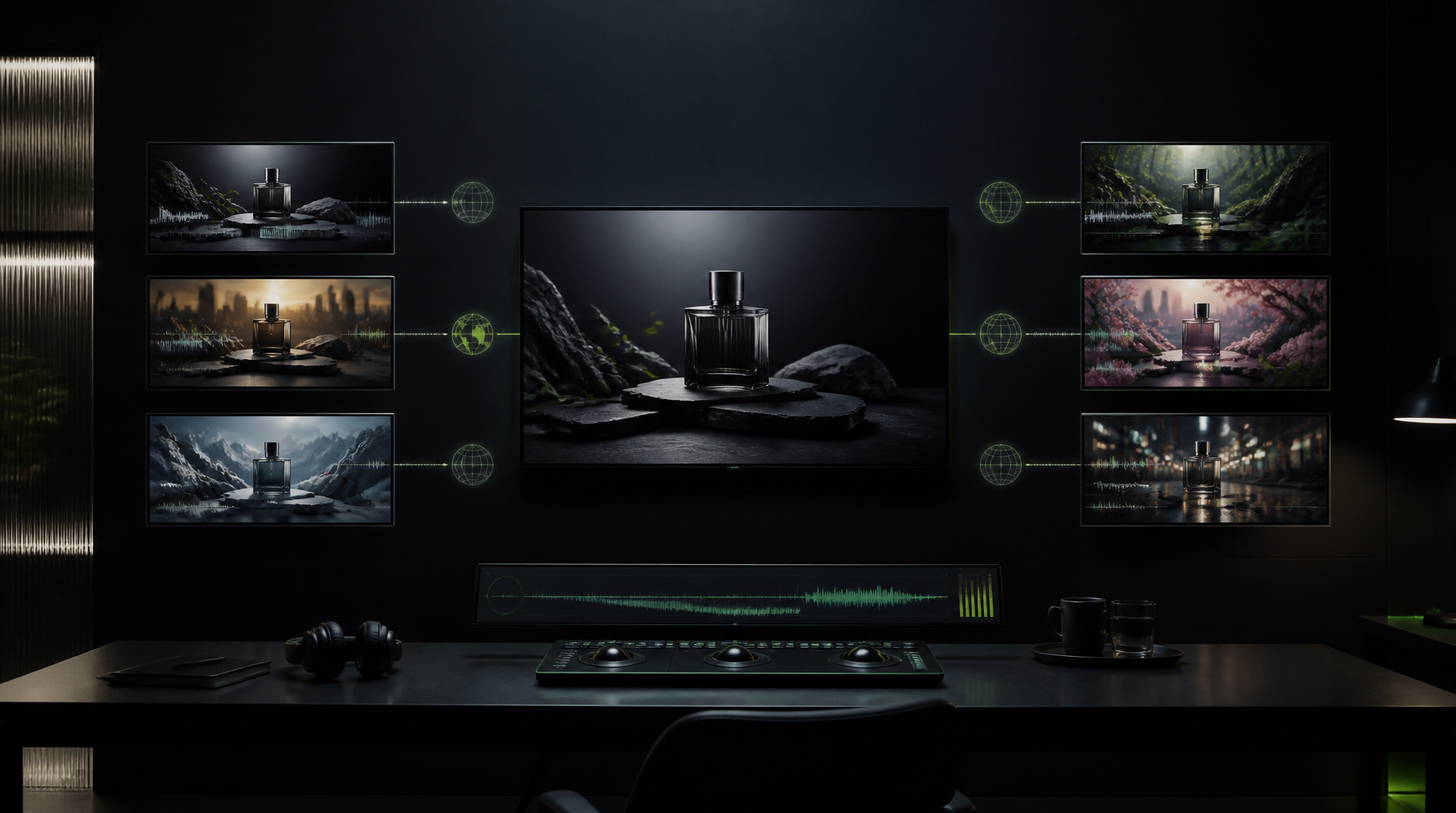
It means the project has a defined visual anchor before motion starts.
That anchor usually includes:
the primary frame or key still,
the product truth that cannot drift,
the character identity or face logic,
the material and lighting rules,
the camera role,
and the list of forbidden changes.
Different tools name this differently. One interface talks about image guidance. Another uses first-frame control, subject consistency, start frame, reference strength, or character lock.
The label matters less than the production logic.
The scene needs one source of truth.
Without that source of truth, the model is forced to improvise too many variables at once.
Which controls matter before prompt polish
Before the team spends energy polishing language, it should get five controls into the same place.
1. Primary frame authority
Which visual is the scene obeying first?
If the system has three product stills, two mood references, one storyboard frame, and a loose text prompt, someone has to decide which reference outranks the others.
Otherwise the model blends signals instead of following direction.
2. Reference weight
How strongly should the model obey the source image?
Too little reference weight and the output drifts into a new object, new face, or new material treatment.
Too much and the motion can feel stiff, overconstrained, or trapped in a barely moving collage.
This is why serious testing starts with one scene and two or three controlled weight settings, not with a broad prompt rewrite.
3. Motion envelope
What is allowed to move?
Camera push, hand gesture, fabric flow, background parallax, liquid splash, packshot rotation, hair movement, and facial expression do not carry the same risk.
If the team says "make it more dynamic" without saying what must remain stable, the model often borrows freedom from the wrong part of the scene.
4. Product truth
What would make the product become commercially unusable?
This is the part teams skip too often. The cap changes shape. The label softens. The reflective finish becomes matte. The material seam disappears. The packshot becomes more beautiful and less true.
That is not a cosmetic issue.
It is the moment the asset stops being reliable brand work.
5. Drift tolerance
What level of variation is acceptable before the shot is rejected?
Not every scene needs zero drift. Some cinematic work can tolerate a little atmospheric variation. A product close-up usually cannot.
The team should define that threshold before generation, not after six rounds of frustration.
What to test first
If a brand wants cleaner AI video consistency, do not start by testing ten models.
Start with one controlled scene and this order:
Lock one primary reference frame.
Define the product or character details that must never drift.
Test a narrow range of reference strength or guidance settings.
Keep the prompt stable while you test motion behavior.
Reject outputs against a pre-written drift checklist.
That sequence teaches more than a broad model comparison ever will.
It also produces better production notes for the next round.
What usually breaks the scene
The failure pattern is surprisingly repetitive.
Too many references with no hierarchy
The team gives the model more material but not more direction.
Prompt ambition bigger than the lock
The shot asks for camera movement, expression change, atmosphere, object detail, typography discipline, and narrative emotion all at once.
The reference anchor cannot carry that many jobs cleanly.
Approval happens on the prettiest frame
A team chooses the most impressive still instead of the most controllable scene logic.
Then the next version cannot reproduce what was approved.
Nobody records why a scene failed
When rejection notes stay verbal, the team repeats the same mistake with slightly different styling.
That is where production speed quietly dies.
What Gateway Studio should own
Gateway Studio should not only store prompts and outputs.
It should own the control layer around the shot.
That means:
the primary reference stack,
the chosen authority frame,
the allowed motion job,
the forbidden drift list,
the tested guidance ranges,
the rejected outputs and why they failed,
and the approved settings that made the scene usable.
This is the difference between random generation and a real production system.
The workflow should remember why the hero shot worked, why the alternate failed, and which setting broke the material truth.
Once that memory exists, future scenes get faster without getting sloppier.
The practical rule
Before you say the model is weak, ask a harder question:
Did we actually lock the scene?
If the answer is no, the model may be getting blamed for a direction problem.
The premium move is not to keep switching tools.
The premium move is to define one authoritative frame, one clear motion job, one drift boundary, and one review memory that survives the next round.
That is how AI video starts acting less like a novelty machine and more like a controlled production asset.
It means the shot has one clear visual authority before motion starts: a primary frame, the product or character truth that cannot drift, the allowed motion role, and the forbidden changes list.
Next move