The shirt looks expensive.
The light is clean. The model feels believable. The crop would probably stop a thumb in paid social.
Then someone who actually buys clothing looks at the sleeve.
The cuff twists in a way the real garment never does. The shoulder seam sits too far back. The hem suddenly climbs when the pose changes. The fabric behaves like polished styling instead of something a body is actually wearing.
That is where a lot of AI model photography goes wrong. Not in the obvious uncanny moments. In the quieter approval mistakes that happen because the image is persuasive before it is true.
For an ecommerce team, that difference matters. An on-model frame can be used for a PDP, a collection page, a launch hero, a Meta crop, or an email card. Those jobs do not ask for the same amount of truth. If the team approves one attractive image without deciding which job it is allowed to do, the garment starts lying in places where buyers read closely.
Gateway's view is simple: AI model photography can save real time for apparel and lifestyle brands, but only when garment truth, model role, fit range, crop rules, and approval memory are locked before variants multiply.
Styling can fool the room before the buyer even arrives
A good-looking image can hide a bad fit decision for surprisingly long.
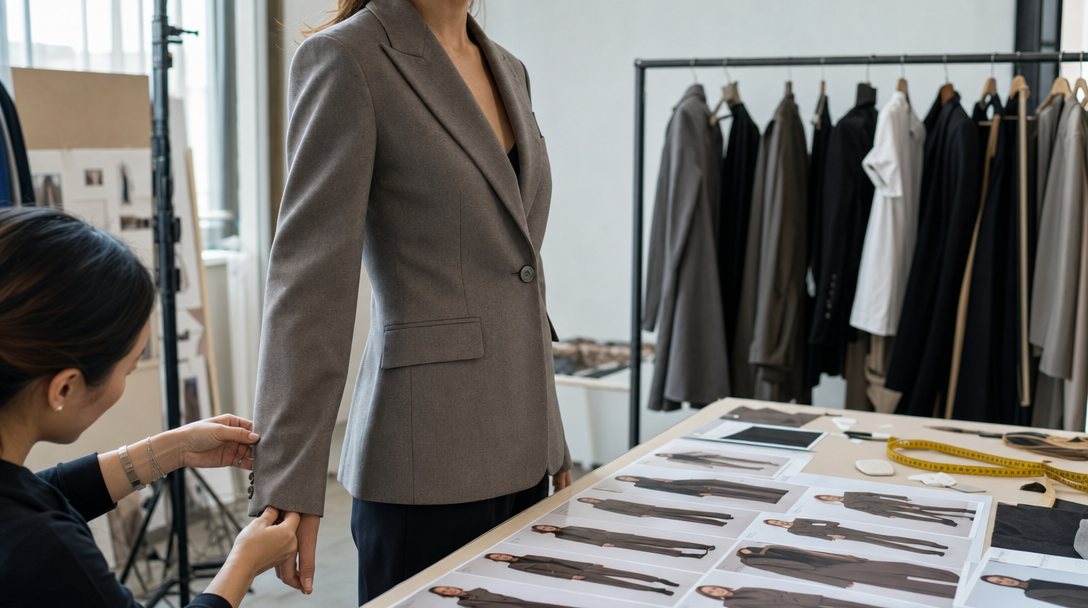
Take a women's blazer for a spring launch. The AI image may nail the color, the jewelry, the soft morning light, and the brand mood. The room feels relieved because it finally has something that looks premium. But the lapel may sit flatter than the real garment, the sleeve length may shorten between frames, and the waist shaping may become sharper than the actual cut.
Or take a knit dress. One image can look elegant in a still standing pose and then collapse the second the model turns, sits, or lifts an arm. The knit suddenly behaves like a painted surface instead of cloth with weight and stretch.
Buyers notice these things fast, even if they do not describe them in technical language. They read:
whether the product feels honest on a body,
whether the material behaves like the garment they expect,
whether the cut looks stable from one frame to the next,
and whether the ad is borrowing confidence the PDP cannot support.
That is why the first strong frame should not be treated as fit proof. It is only proof that the styling, mood, and composition are working.
Make a fit pack, not just a moodboard
Most teams start AI model photography with references for taste. They bring poses, lighting, cool locations, good casting energy, and aspirational brand images.
That is useful. It is not enough.
Before production starts, build a fit pack that tells the room what the garment is allowed to do and what it is not allowed to fake.
Your fit pack should include:
authority garment stills: front, side, back, close details, and one real flat or hanger reference,
fit intent: oversized, straight, cropped, relaxed, body-skimming, structured, or tailored,
critical zones: shoulder seam, sleeve break, collar stand, waistband position, hem drop, pocket placement, drape, strap tension,
material behavior notes: crisp cotton, fluid satin, thick denim, soft knit, heavy wool, sheer layer,
model-role rules: approved body range, age impression, styling ceiling, and what kind of persona the model may or may not imply,
pose ceiling: which movements are safe and which ones usually invent new fit problems,
likeness and disclosure boundaries: no copied real person, no unclear consent story, no synthetic-content ambiguity if the brand has a disclosure standard,
usage split: which frames may sell and which frames must prove.
Example: for a trench coat, the authority is not only the hero pose. It is also the collar shape when open, the belt hang, the sleeve volume, the hem weight, and how the coat behaves when one hand goes into the pocket.
That pack gives the team something better than taste. It gives them a control object.
Decide which images are allowed to sell and which images must prove
One of the biggest mistakes in AI model photography is asking the same frame to do every job.
It should not.
PDP proof images
These are the images a buyer reads literally.
They should stay closer to garment truth:
cleaner stance,
lower pose drama,
clearer silhouette,
less prop noise,
less aggressive crop,
and less styling that hides seams, length, or fit transitions.
Example: a denim jacket PDP image should make it easy to judge shoulder width, body length, sleeve finish, wash behavior, and where the jacket sits over the waistband. If the model pose twists the torso so much that the buyer cannot read that, it may still be a good ad image, but it is no longer a proof image.
Ad and social crops
These can do more persuasive work.
They can crop tighter, use stronger motion, introduce more personality, and lean further into atmosphere. But they still cannot invent a different garment.
Example: a paid-social crop for the same denim jacket may focus on the upper torso, hand gesture, face angle, and one confident line of styling. That is fine if the jacket still feels like the same product the buyer meets after the click. The moment the ad implies a sharper taper, shorter body, or cleaner sleeve break than the PDP supports, the crop has borrowed trust from the next page.
Launch heroes
These sit between proof and persuasion.
A launch hero can be more cinematic than a PDP, but it should still inherit garment truth from the proof set. If a silk blouse suddenly looks heavier, shinier, or more structured in the hero because the image is prettier that way, the launch page may feel polished while the product feels unstable.
That split is what keeps one nice-looking frame from becoming a false source of authority.
Four mistakes to test before you scale variants
Do not ask whether the model is "good enough now." That question is too broad to protect a catalog or campaign.
Run four tighter tests.
1. The arm-raise test
Take one approved on-model direction and generate a neutral standing pose, one arm-lift pose, and one half-turn pose.
Then compare:
sleeve length,
armhole tension,
chest volume,
hem movement,
and whether the garment still feels cut from the same pattern.
This test exposes fake fit fast. A shirt can look perfect until the elbow bends.
2. The fabric honesty test
Use one garment where material is part of the sale.
For a satin skirt, check whether highlight flow follows the folds naturally. For a knit top, check whether stretch lines appear where the body is actually carrying tension. For linen trousers, check whether the crease behavior looks like fabric, not a beauty retouch effect.
If the material starts acting like surface decoration, the image may still be stylish, but it stopped being a useful garment decision.
3. The PDP-to-ad continuity test
Generate one clean proof frame, one 4:5 Meta crop, and one 9:16 story crop from the same direction.
Now put them beside the real garment stills. Does the same body length remain believable? Does the sleeve opening stay consistent? Did the waist or neckline quietly improve when the crop became more dramatic?
Teams often approve continuity drift because each individual frame looks good on its own.
4. The styling ceiling test
Ask how much styling the product can survive before the garment disappears.
Example: a premium cardigan may tolerate a coffee cup, one chair, one soft morning window, and a relaxed pose. Add too much jewelry, too much hair movement, too much coat layering, and too much set dressing, and the buyer stops reading the cardigan.
This matters because many AI model images fail not from ugly generation, but from styling that becomes stronger than the product.
Where AI model photography really earns its speed
Used well, this workflow is genuinely useful.
It can help when a team needs:
more on-model variants from an already approved garment,
controlled crop sets for Meta, TikTok, email, and landing pages,
fast environment exploration around one outfit story,
seasonal refreshes without a full production day,
a stronger launch hero while keeping the garment tied to real references,
or a faster first pass on styling territories before committing to a physical shoot.
Example: an apparel brand has a clean studio PDP shoot but wants warmer editorial support for paid and homepage use. AI model photography can be the right move if the team already owns the garment truth and uses AI to expand crops, environment, and styling range around that truth.
That is a very different job from asking AI to invent trustworthy fit from almost nothing.
Where a real shoot is still the smarter line item
There are moments where buying real proof is cheaper than managing false confidence.
A real shoot is often the better choice when the product depends on:
technical fit,
compression or support claims,
highly structured tailoring,
delicate transparent layers,
sensitive size confidence,
or material behavior that buyers inspect closely before purchase.
Example: performance leggings, shapewear, bras, technical outerwear, and formal tailoring all ask for more truth than most AI-first approvals can safely carry.
The same applies when the brand needs a real founder, athlete, or customer likeness with clear consent and usage rights. If the identity itself carries trust, the cost of ambiguity rises fast.
AI model photography is strongest where the brand wants controlled expansion around a known product truth, not where the image must substitute for that truth entirely.
What Gateway Studio should remember after review
The image output is only part of the system. The memory around the output is what stops the team from repeating the same mistake next week.
For AI model photography, Gateway Studio should hold:
authority garment stills and detail crops,
fit-pack notes by garment,
approved model-role card,
banned likeness directions,
approved pose family,
rejected fit drifts with reasons,
allowed styling range by product,
approved crops by placement,
disclosure note if the brand uses synthetic-content labeling,
and the link between the ad frame and the destination PDP or landing hero.
Example: if the team rejects three images because the blazer shoulder became too sharp, that should not stay verbal. It should become memory. Otherwise the next prompt will recreate the same mistake with better lighting and the room will waste another review cycle.
The real job is not prettier people. It is safer product trust.
That is the point most teams miss.
AI model photography is not difficult because synthetic humans are hard. It is difficult because apparel buyers read body, fabric, and fit faster than internal teams admit.
The image can be beautiful and still be commercially weak. The model can feel believable and still teach the buyer the wrong thing about the garment.
The better workflow does not start by chasing a stunning face. It starts by deciding what the clothing must stay true to, which frames may persuade, which frames must prove, and what the system should remember after approval.
If that control layer is in place, AI model photography can become a useful ecommerce production tool. Without it, the team is usually just approving attractive fit fiction.
It is the control set behind the images: authority garment stills, fit intent, seam and hem priorities, material notes, approved body range, pose ceiling, likeness boundaries, and rules for which images may prove versus simply persuade.
Next move