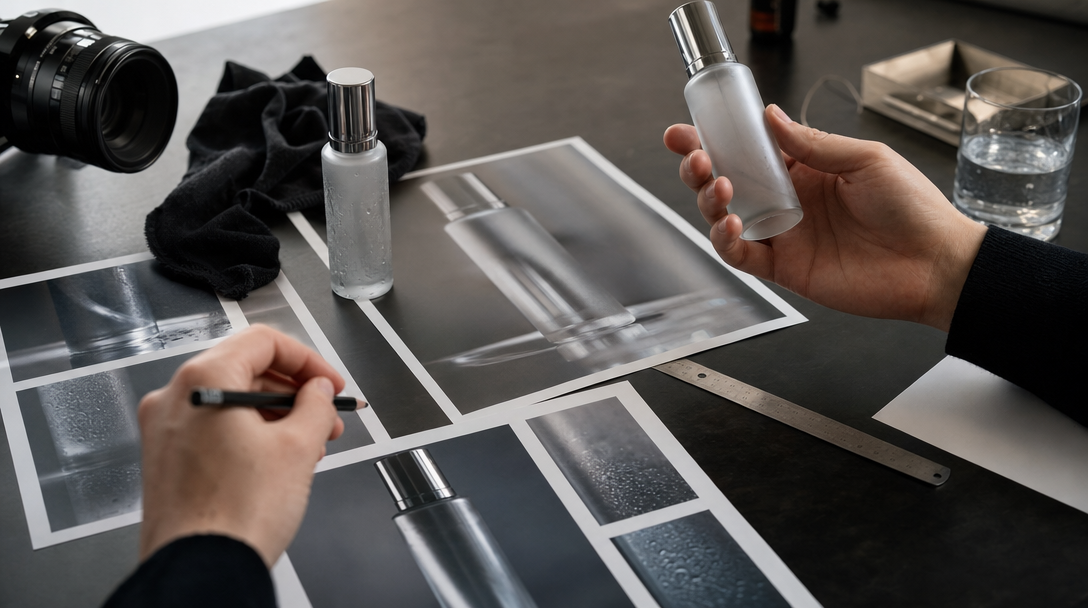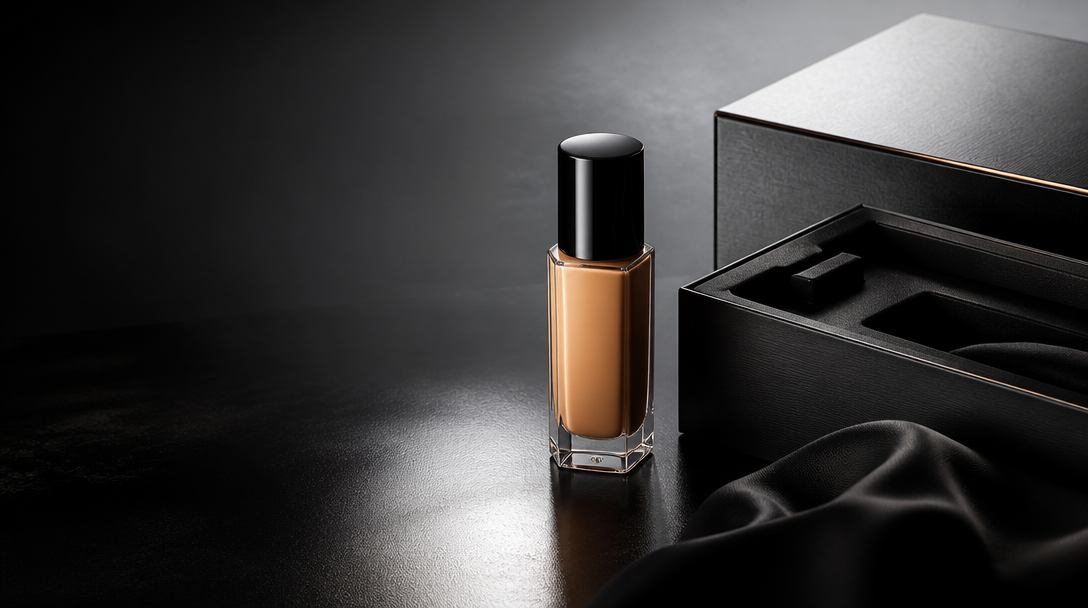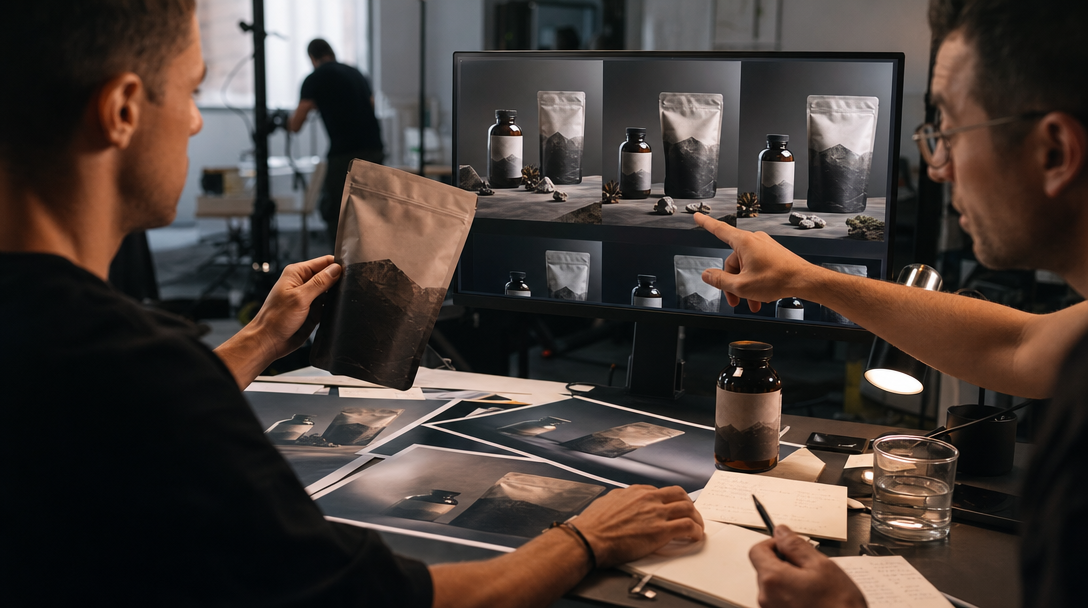
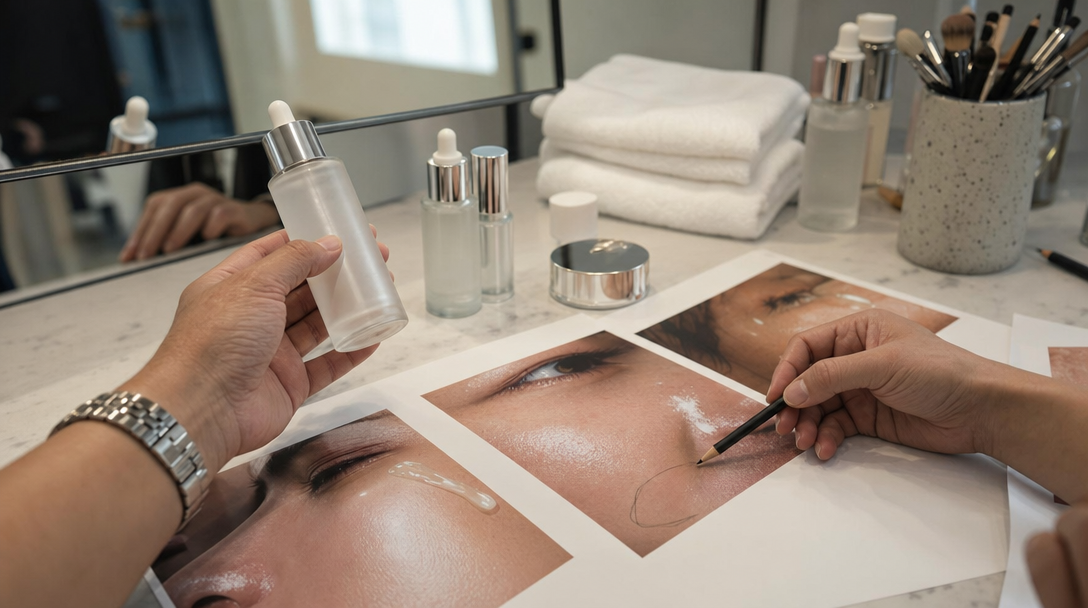
The bottle is usually not the first problem.
The dangerous frame comes later. The serum touches skin, the drop suddenly looks larger than the real dose, the finish turns glassier than the product ever wears in daylight, and the hand starts behaving like a beauty prop instead of a human using skincare.
That is where many AI skincare ads quietly lose the room.
The image may still look premium. It may even look more polished than the brand's last real shoot. But once the viewer reads the frame as application proof instead of atmosphere, small visual lies start carrying commercial weight.
In beauty, the line between persuasion and evidence is thin. A cold Meta ad, a retailer PDP crop, a landing page hero, and a creator-style hook do not all need the same amount of truth. If the team lets one elegant close-up do every job, the ad starts promising skin behavior, product amount, and result logic the real product cannot defend.
Gateway's view is straightforward: AI skincare ads work best when the team locks application truth before it chases beauty polish. That means dose, spread, finish, hand role, skin context, claim ceiling, and review memory all need to exist before the first close-up becomes the hero.
In skincare, the close-up is not decoration
Beauty teams often review the bottle shot first.
That makes sense. Packaging, reflection, color, cap finish, and label hierarchy are all visible problems.
But the skincare ad usually becomes risky at the application moment.
Take a vitamin C serum ad. The pack may look excellent on stone. Then the product hits the cheek and the droplet behaves like honey, the skin sheen turns editorial instead of believable, and the amount implies a richer experience than the formula actually gives.
Or take SPF. One frame can look clean until you ask whether the spread pattern, cast, and finish still feel honest across different skin tones and lighting conditions. If the answer is vague, the ad is no longer just a beauty image. It is acting like product evidence without earning that role.
That is the first decision rule: when the viewer is meant to learn how the product sits, spreads, absorbs, brightens, smooths, or supports makeup, the frame has crossed from aesthetic territory into proof-sensitive territory.
Once that happens, better lighting is not the fix. Control is.
Build an application truth sheet, not just a moodboard
Most skincare teams already know how to build a taste board.
They bring:
marble vanities,
chrome taps,
fresh towels,
soft bathroom daylight,
dewy skin references,
and expensive macro details.
Useful. Still not enough.
Before generation starts, build an application truth sheet for the product.
For a serum, that sheet should include:
the real dose range that feels believable on skin,
how the formula sits before it is spread,
how fast it should absorb,
what kind of finish is honest in daylight,
which part of the skin may be shown close,
whether fingers, pipettes, or tools are allowed,
which nail, jewelry, and hygiene choices still fit the brand,
what kind of before-and-after implication is forbidden,
and which frames may sell mood versus explain product behavior.
Example: for a niacinamide serum, the authority is not only the hero bottle. It is also the size of one drop on skin, the way it catches light before blending, the finish two seconds later, and whether the cheek still looks like real skin instead of editorial gloss.
For a cream in a jar, the authority may shift: spatula contact, scoop volume, edge texture, finger pressure, and the point where the product stops looking tactile and starts looking like decorative frosting.
That sheet gives the review room something stronger than taste. It gives the room a product behavior contract.
Four tests catch fake beauty logic early
Do not ask whether the ad feels premium enough. That question is too soft to protect a beauty brand.
Run tighter tests instead.
1. The dose ladder test
Generate three versions of the same application moment:
conservative dose,
believable everyday dose,
and slightly too-rich dose.
Then ask which one the real product could still defend in paid media and on a landing page.
Example: for a pump moisturizer, too much product often looks luxurious in the frame but dishonest in use. The wrong image teaches the audience that the formula is meant to sit on skin like styling cream.
2. The finish continuity test
Take one approved close-up and move it through three contexts:
bathroom-style daylight,
studio beauty light,
and paid-social crop compression.
Does the finish still feel like the same product? Or does it become wetter, shinier, smoother, or more corrective every time the frame gets more persuasive?
That drift matters. A skincare ad often fails because the finish starts selling fantasy instead of formula behavior.
3. The hand-role test
In beauty work, the hand is rarely neutral.
A hand can imply gentleness, expertise, routine, luxury, hygiene, sensuality, or creator intimacy. If the product is premium but the hand looks generic, stiff, over-manicured, or disconnected from real use, the whole scene starts feeling staged.
Example: for a dropper serum, the finger tension around the pipette and the distance to the cheek tell the viewer whether this is real application or just a styled beauty prop. That is why the hand needs its own review role, not just a quick artifact check.
4. The result-language test
Put the frame next to the line it will carry.
Would the image still be safe under:
"hydrates without heaviness,"
"sits clean under makeup,"
"helps skin look calmer,"
or "gives a glazed finish"?
Different lines create different proof pressure. If the frame only works when the audience over-reads the result, it is not strong. It is risky.
Split the jobs before one frame tries to do everything
Many skincare campaigns get weaker because one image is asked to be:
the packshot,
the texture demo,
the trust frame,
the creator hook,
and the conversion image.
That is too much work for one close-up.
The stronger move is to split the visual jobs.
Pack-truth frame
This frame protects the bottle, pump, cap, label hierarchy, size impression, and material finish.
Example: a frosted serum bottle on a real vanity can stay calmer and more literal because its job is object truth, not emotional seduction.
Application-proof frame
This frame shows product amount, placement, skin context, and believable finish.
Example: one cheekbone application moment can explain how the serum sits without pretending it already proved a dramatic skin result.
Sensory beauty frame
This is where mood can work harder. Steam, soft daylight, towel texture, mirror atmosphere, and elegant pacing are welcome here because the frame is carrying desire, not hard proof.
Creator-style hook frame
This frame can be tighter, faster, and more social in rhythm, but it still should not borrow fake testimonial authority.
Example: a creator-style opening can say, "This is the texture test I check first," if the brand truly uses it as an operator POV. It should not feel like a real customer review unless the brand has real customer proof behind it.
Once those jobs are separated, the team stops arguing about taste and starts protecting the role of each asset.
Where AI actually helps skincare brands move faster
Used well, AI is genuinely useful here.
It can help a beauty brand:
test multiple environments around one approved pack,
build a tighter family of paid-social crops,
explore bathroom, vanity, clinic-clean, or editorial worlds before a shoot,
prep controlled creator-style openings for the media team,
localize product-intro scenes without rebuilding the whole visual world,
and extend one approved application logic into more placements.
Example: a premium skincare brand already has real pack references, approved claim boundaries, and one reliable application lane. AI can then help turn that foundation into Meta 4:5 cuts, Reels crops, email cards, and launch hero variants without reinventing the product every time.
That is a very different job from asking AI to invent trustworthy application truth from almost nothing.
Where real capture should come back into the workflow
Some beauty surfaces are too sensitive to leave fully synthetic.
A real shoot is usually the smarter line item when the brand needs:
exact skin-result proof,
dermatologist or founder authority on camera,
regulated before-and-after logic,
highly specific shade-match evidence,
close skin texture that must survive scrutiny,
or retailer-facing product truth the legal team will read literally.
Example: if a complexion product needs to prove tone match across deeper skin tones, AI can still help with planning, scene direction, and variant logic. But the trust-heavy proof moment often deserves reality.
The same is true when the person in frame carries real authority. If the founder, formulator, or clinician is part of the promise, the cost of synthetic ambiguity climbs fast.
What Gateway Studio should remember after the review
If the team has to rediscover the same beauty problems every round, the system is not getting smarter.
Gateway Studio should keep:
the pack-truth references,
the application truth sheet,
the approved dose ladder,
the allowed skin-finish range,
the hand-role rules,
banned claim pairings,
rejected frames with reasons,
approved placements by asset job,
and the continuity note between the ad frame and the destination page.
That memory is what keeps the next variant from becoming prettier and less honest at the same time.
The premium move is not to make skincare look more synthetic and more expensive.
It is to make the product look persuasive without lying about how it behaves once it touches skin.
It is the control layer behind the close-up: believable dose range, spread behavior, finish in real light, allowed skin zones, hand-role rules, forbidden result implications, and which frames may explain product behavior versus simply sell beauty mood.
Next move